

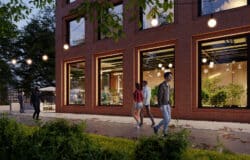


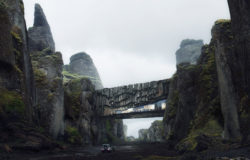




Following Bertrand’s great 3d recreation of the Bauhaus School at Dessau, I got that many request to post more detail about the snowy image he made in that set. Bertrand kindly agreed to write about the process of making his snowy scene, and I’m happy to publish his 5 tips for handling snow in an architectural visualization 3d scene. Enjoy!
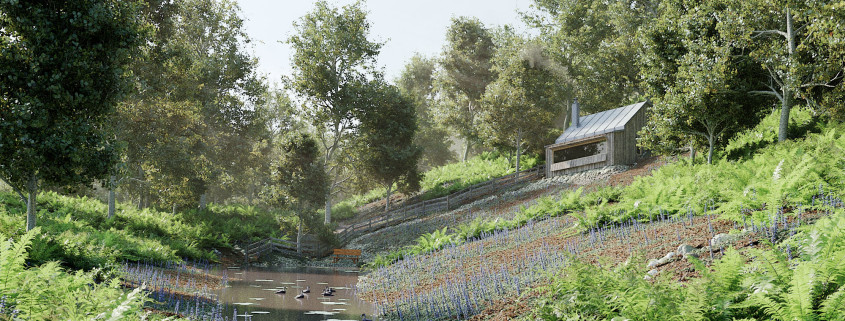
Read More Post a comment (19)Here’s a quick and flexible way to emulate the look of fog in the background of an image. I recently used this technique in the visualization of the Agami House in Yaffo. It’s true it might not look real enough but for most cases this really looks good enough and you have the added bonus of fast render and flexible edit inside Photoshop if the client ask for tweaks.
Read More Post a comment (8)Here’s a quick tip I use almost all the time now, mostly because I really like the look and it’s easy and quick to setup, but the main advantage of an AO (ambient occlusion) pass is spotting problem areas in the geometry – especially holes and flipped normals you might have missed
Read More Post a comment (18)I picked up SketchUP my first year of architecture school back in 2002 and never stopped using it since. It is as powerful as it is simple, and yet I’ve seen too many pick up bad habits who find it hard to utilize SketchUP to its full potential.
So while I work on the continuation of the Making of ‘MS House’ – Part 1, Let me elaborate further and share some more of my SketchUP work-flow. Before I get specific about a few things, I should mention that it is good practice to have the manual comfortably nearby while modeling and I also highly recommend watching the SketchUP video guides. The information I’ll elaborate here will, hopefully, help you model fast and efficient with a great amount of control over the 3d modeling process.
This is a pure text post, so please bear with me.
Read More Post a comment (35)